

The financial industry is entering a new era one where software agents manage money autonomously.
Over the past decade, financial automation evolved from simple trading bots to complex DeFi protocols. But today we are witnessing a much deeper transformation: Agentic Finance.
Agentic Finance represents the intersection of Artificial Intelligence, decentralized finance (DeFi), and autonomous decision-making systems.
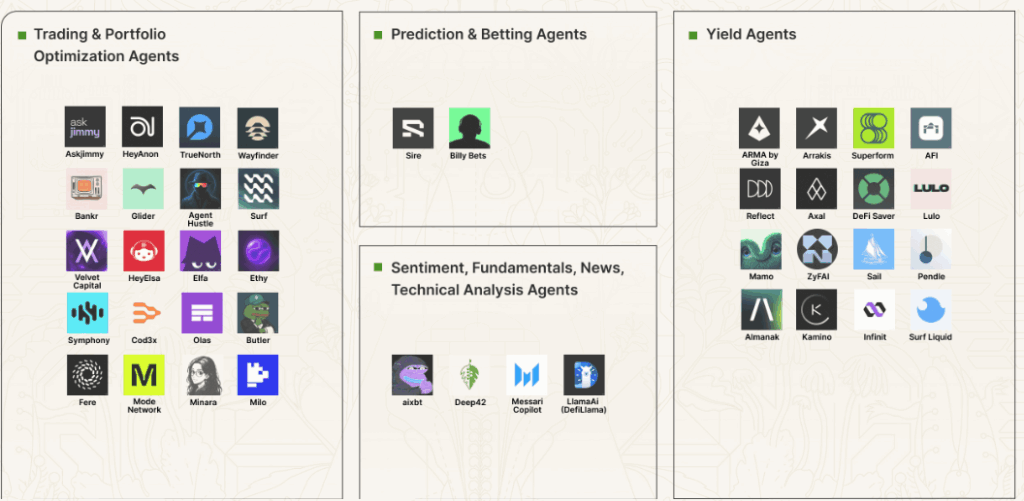
In this article, we explore:
- What Agentic Finance actually means
- How autonomous agents are managing capital
- The emerging market landscape in 2026
- Why stablecoins and crypto rails are critical infrastructure for AI agents
- What the future of financial automation looks like
What Is Agentic Finance?
Agentic Finance refers to financial systems where autonomous software agents manage funds, execute transactions, and optimize financial strategies with minimal human intervention.
These agents can perform activities such as:
- Trading digital assets
- Allocating liquidity across DeFi protocols
- Optimizing yield strategies
- Executing payments
- Monitoring markets and sentiment
- Managing portfolio risk
Unlike traditional financial automation, Agentic Finance introduces software agents capable of independent decision-making.
These agents may rely on:
- Large Language Models (LLMs)
- Machine learning models
- Rule-based financial algorithms
- Hybrid AI + algorithmic systems
The goal is simple: software that can act financially on behalf of users.
The Evolution of Financial Automation
Agentic Finance did not appear overnight. It evolved gradually through multiple phases of financial automation.
Phase 1 — Trading Bots (2016–2019)
Early crypto automation focused on simple algorithmic trading bots.
These systems executed predefined rules such as:
If BTC price drops 5% → buy
If BTC price rises 10% → sell
They provided automation but no real intelligence.
Phase 2 — DeFi Automation (2020–2022)
The DeFi boom introduced automated strategies such as:
- Yield farming
- Liquidity mining
- Vault automation
Protocols like Yearn Finance automated capital allocation across lending and liquidity pools.
However, users still configured the parameters manually.
Phase 3 — Cross-Protocol Automation (2022–2024)
Automation expanded to include:
- Collateral management
- Liquidation protection
- Cross-chain liquidity rebalancing
- Portfolio optimization
But the user remained in control of every decision.
Phase 4 — AI-Driven Financial Agents (2024–Present)
The real shift happened when AI entered the financial stack.
Large Language Models introduced:
- Natural language trading interfaces
- AI-driven financial analysis
- Automated research and decision support
By 2025, autonomous agents began executing strategies without requiring human approval.
This closed the loop:
AI → Decision → Execution → Capital management
This is the birth of Agentic Finance.
Autonomy vs Intelligence in Financial Agents
Not all financial agents are equal.
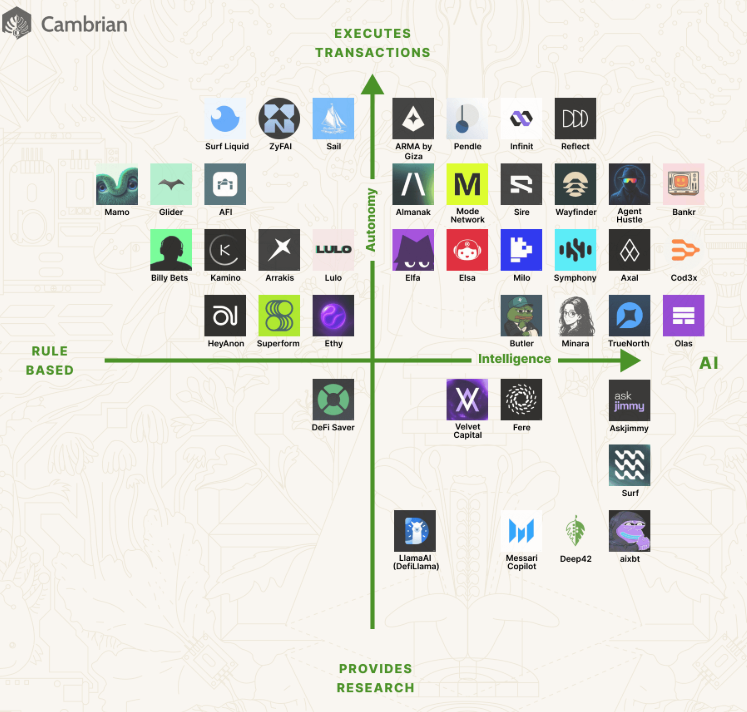
Agentic Finance systems can be categorized along two dimensions:
Intelligence
This refers to how decisions are made.
There are two main types:
Rule-Based Agents
These rely on deterministic logic and mathematical models.
Examples:
- Arbitrage bots
- Liquidity management systems
- Yield optimization algorithms
They are predictable and auditable.
AI-Based Agents
These rely on LLMs or machine learning.
Examples:
- Market analysis assistants
- Sentiment tracking agents
- AI trading copilots
They provide richer insights but are harder to audit.
Autonomy
Autonomy defines how much control the agent has.
There are three major categories:
Informative Agents
These agents only provide insights.
Example:
- Market research bots
- Data analytics assistants
Humans still make the final decision.
Human-in-the-loop Agents
These agents suggest actions but require confirmation.
Example:
- AI trading assistants
- portfolio management copilots
Fully Autonomous Agents
These agents execute financial actions automatically within predefined policies.
Examples include:
- Automated yield optimization
- Algorithmic trading agents
- AI portfolio managers
These represent the highest level of Agentic Finance.
Agentic Finance Market Growth (2025–2026)
The Agentic Finance ecosystem has grown rapidly.
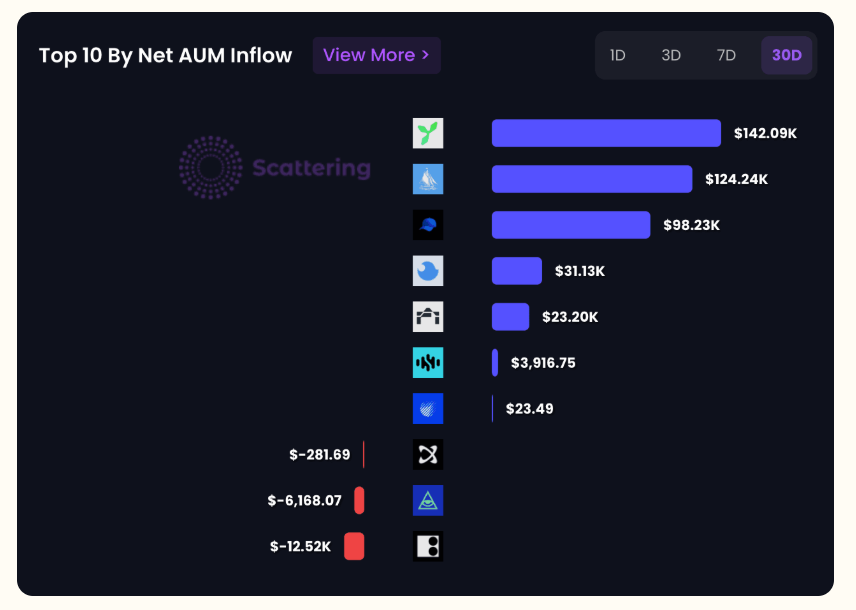
Recent industry metrics reveal significant adoption:
- 15 million agentic payment transactions in the past 30 days
- $50M+ cumulative volume in autonomous agent payments
- 24,000+ autonomous agents registered onchain
- 900+ user deposits across leading AgentFi protocols
This growth is driven by three major factors:
- AI adoption
- DeFi infrastructure maturity
- Stablecoin settlement rails
Key Infrastructure Enabling Agentic Finance
Agentic Finance requires new infrastructure layers.
Several emerging standards are enabling the ecosystem.
x402 Payment Protocol
The x402 protocol enables machine-to-machine payments.
This allows AI agents to:
- pay for APIs
- purchase compute resources
- execute financial transactions
Major companies supporting this include:
- Stripe
- AWS
- Coinbase infrastructure partners
ERC-8004 Identity Standard
ERC-8004 enables autonomous agents to register identities onchain.
Each agent receives a reputation profile stored as NFTs.
This allows marketplaces to verify:
- agent history
- transaction reliability
- performance reputation
Agentic Wallets
Agentic wallets allow AI agents to control funds programmatically.
These wallets support:
- smart contract execution
- programmable treasury management
- automated payment flows
Coinbase recently introduced Agentic Wallet frameworks designed specifically for AI systems.
The Agentic Finance Product Landscape
Agentic Finance products fall into four primary categories.
1. Trading & Portfolio Optimization Agents
Trading and Portfolio Optimization Agents
Trading agents are the first product most people think of when they hear “agentic finance.” These agents manage users’ funds by rebalancing portfolios or picking assets to buy or sell. Decision-making in trading requires access to an exchange, assets to trade, a budget, trading guidelines or rules, and high-quality data. The agentic tools below provide support for one or more of these aspects.
| Project | Focus | Intelligence | Autonomy | User Interface |
|---|---|---|---|---|
| AskJimmy | AI signal terminal with win-probability/P&L and one-click execution. | Rule-based | Autonomous | GUI |
| HeyAnon | Spot and leverage trading configured with natural language prompts | Rule-based | Autonomous | Chat |
| TrueNorth | Trading is supported by an advanced discovery and research engine | Hybrid | Informative | Chat |
| Wayfinder | Utilizes onchain agents to transact across multiple chains autonomously | Rule-based | Autonomous | Chat |
| Bankr | All-in-one DeFi terminal with cross-chain swaps and automated strategies | Hybrid | Customizable | Chat |
| Glider | Automated, customizable portfolio management | Rule-based | Customizable | Chat |
| Agent Hustle | DeFi personal assistant. Everything from basic swaps to custom automated strategies | Hybrid | Customizable | Chat |
| Velvet Capital | DeFi app with an informational assistant who can take some basic actions, like swaps | LLM | Human-in-the-loop | Chat |
| Surf | DeFi research and execution copilot that combines deep market analysis with automated trading workflows | Hybrid | Customizable | Chat |
| HeyElsa | AI assistant for managing crypto assets, executing DeFi transactions, and providing real-time cross-chain data | Hybrid | Customizable | Chat |
| Elfa | Analytics-first trading copilot that blends social signals with smart wallet tracking. | Hybrid | Human-in-the-loop | Chat |
| Ethy | Autonomous trading assistant that executes trades, staking, yield, and transfers directly from users’ smart wallets | Hybrid | Human-in-the-loop | Chat |
| Symphony | Cross-chain DeFi execution terminal with AI-powered trading assistance | Hybrid | Human-in-the-loop | Chat |
| Cod3x | Event-driven trading engine with a terminal that enables updateable algorithmic trading strategies | Hybrid | Human-in-the-loop | Chat |
| Olas | Autonomous portfolio management agent deployed via desktop with adaptive DeFi strategies | Hybrid | Human-in-the-loop | Chat |
| Butler | Orchestration agent executing trading, yield farming, and DeFi automations via Virtuals Protocol agents | Hybrid | Customizable | Chat |
| Fere | AI copilot for trading across chains, memecoins, prediction markets, and DeFi protocols | Hybrid | Customizable | Chat |
| Mode Network | Perp DEX with LLM-powered trading agents that execute 24/7 based on user-configured strategies | Hybrid | Customizable | GUI |
| Minara | AI trading assistant with perps copilot and customizable agentic workflows | Hybrid | Customizable | Chat |
| Milo | Solana trading agent with natural language execution and optional 24/7 auto-trader | Hybrid | Customizable | Chat |
Trading agents are the most popular type of AgentFi application.
They can:
- rebalance portfolios
- trade across exchanges
- optimize asset allocation
- execute strategies 24/7
Examples include:
- AskJimmy
- Bankr
- Wayfinder
- Glider
- Symphony
- Milo
- Fere
These platforms combine:
- AI analysis
- automated execution
- cross-chain trading capabilities
2. Yield Optimization Agents
Yield Agents
Earning yield in AgentFi takes many forms. The most popular at the moment is through lending protocols, where borrowers pay interest, which lenders receive as yield. Users can also provide liquidity in DEX (Decentralized Exchange) liquidity pools to receive trading fees, or deposit funds into curated vaults that allocate capital across multiple venues. The agents below help users find the best risk-adjusted returns across these strategies.
Note: In earlier versions of this report, we split LP and Yield agents into different categories. As time has progressed, we’ve found that more and more projects are combining multiple yield-generating strategies into their strategies, including, but not limited to, lending, LPs, and spot trading.
| Project | Focus | Intelligence | Autonomy | User Interface |
|---|---|---|---|---|
| AFI | Yield optimization through non-custodial algorithmic agents managing liquidity and derivatives strategies | Rule-based | Autonomous | GUI |
| Almanak | Multi-strategy yield optimization using AI-generated strategies. | Hybrid | Autonomous | GUI |
| ARMA by Giza | Stablecoin yield agent | Rule-based | Autonomous | GUI |
| Arrakis | Automated market-making strategies | Rule-based | Autonomous | API |
| Axal | Finds the best lending protocols, liquidity pools, and delta-neutral yield strategies | Rule-based | Autonomous | GUI |
| DeFi Saver | Lending and borrowing across all major protocols, with automated protection against liquidation | Rule-based | Human-in-the-loop | GUI |
| Infinit | DeFi abstraction layer with premade agents for one-click yield strategies and promptable DeFi strategies | Hybrid | Customizable | GUI |
| Kamino | Automated lending protocol with optimized yields, leveraged positions, and modular credit markets on Solana | Rule-based | Autonomous | GUI |
| Lulo | Generates yield by depositing funds into over-collateralized lending pools | Rule-based | Autonomous | GUI |
| Mamo | Finance assistant designed to simplify personal financial management | Rule-based | Autonomous | GUI |
| Pendle | Autonomous yield optimization across lending protocols, vaults, and delta-neutral strategies | Hybrid | Autonomous | GUI |
| Sail | Autorotates funds through lending pools, vaults, and AMMs | Rule-based | Informative | Chat |
| Superform | Non-custodial onchain neobank aggregating yield across lending protocols with cross-chain deposits | Rule-based | Human-in-the-loop | GUI |
| Surf Liquid | Onchain DeFi agent for autonomous stablecoin yield with verifiable rebalancing | Rule-based | Autonomous | GUI |
| Reflect – Automated DeFi Strategy Management | Autonomous agent on Base that manages LP yield farming end-to-end, deploying liquidity, harvesting, rebalancing, and optimizing returns | Hybrid | Customizable | GUI |
| ZyFAI | Lending yield management | Rule-based | Autonomous | GUI |
Yield-seeking agents focus on generating passive returns.
They automatically allocate capital across:
- lending protocols
- liquidity pools
- staking platforms
- delta-neutral strategies
Examples include:
- Kamino
- Pendle
- Arrakis
- Superform
- AFI
- Almanak
These agents constantly monitor risk-adjusted returns across DeFi markets.
3. Prediction Market Agents
Prediction and Betting Agents
Prediction markets are platforms where users can bet on the outcomes of future events, such as election results or sports competitions. These markets often require tracking news and other real-world information that can unfold and change in unexpected ways in real-time. Prediction markets are one of the most exciting emerging categories within AgentFi. Agents can consume and track real-world event information across a wider range of data sources than humans can manually, making them ideal participants in prediction markets.
We expect this segment to grow in 2026. Academic studies, such as this one from the Federal Reserve, are showing that prediction markets can provide decision-makers with valuable insights. Meanwhile, the CFTC is asserting its authority to legalize prediction markets over state objections.
| Project | Focus | Intelligence | Autonomy | User Interface |
|---|---|---|---|---|
| Billy Bets | Active in crypto-based sports books and prediction markets | Rule-based | Human-in-the-loop | Chat GUI |
| Sire Agent | Pooled autonomous sports betting fund with AI-driven strategy execution | Hybrid | Autonomous | GUI |
Prediction markets allow users to bet on future events.
AI agents excel in this category because they can analyze massive datasets including:
- news
- social media
- economic indicators
- real-world events
Examples include:
- Billy Bets
- Sire Agent
Academic studies suggest prediction markets can produce highly accurate forecasts.
Sentiment, Fundamentals, News, Technical Analysis Agents
Investors often use market analysis to determine what to buy and sentiment analysis to decide when to buy or sell. LLMs have significantly transformed both market and sentiment analysis by scaling the amount of data analyzed, the speed at which it is analyzed, and creating a deeper contextual understanding by identifying connections between data sources⁶. A distinguishing feature of analysis agents and the agents above is that they do not take direct actions; instead, they provide informative guidance. There are many analysis agents; we only list a few below.
| Project | Focus | Intelligence | Autonomy | User Interface |
|---|---|---|---|---|
| aixbt | Crypto market intelligence, narrative detection, alpha analysis, KOL tracking | LLM | Informative | Chat |
| Deep42 | Alpha seeking agent that monitors X for high signal tweets. Performs onchain and offchain analysis for scoring | LLM | Informative | Chat API |
| LlamaAI – DefiLlama | DeFi data assistant querying DefiLlama’s database for TVL, yields, fees, and token analytics | LLM | Informative | Chat |
| Messari Copilot | Delivering cited answers to any question you have, powered by Messari’s Research and up-to-date data | LLM | Informative | Chat |
4. Market Analysis Agents
These agents do not execute trades.
Instead they provide financial intelligence.
They analyze:
- sentiment
- narratives
- market signals
- onchain data
Examples include:
- aixbt
- Messari Copilot
- LlamaAI
- Deep42
These systems help investors identify trends faster.
Institutional Interest Is Growing
While retail users dominate Agentic Finance today, institutions are beginning to explore the space.
Several major developments highlight this trend:
- Grayscale launched a Decentralized AI Fund
- Robinhood introduced an AI trading assistant called Cortex
- Visa launched the Trusted Agent Protocol for AI commerce
These initiatives show that traditional finance is preparing for AI-driven financial systems.
The Macro Backdrop: Crypto Infrastructure Is Maturing
Despite market volatility, the underlying crypto ecosystem continues to grow.
Key data points:
- Crypto market cap recently exceeded $4 trillion
- BlackRock’s Bitcoin ETF recorded $10 billion daily trading volume
- Tokenized real-world assets surpassed $20 billion
- Stablecoin supply reached $310 billion
Stablecoins are becoming the default settlement layer for AI systems.
Machines cannot use traditional banking infrastructure easily.
But they can use programmable digital money.
This is why stablecoins are central to Agentic Finance.
Regulatory Momentum Is Building
Regulators are beginning to define frameworks for digital assets.
Important developments include:
- The U.S. SEC proposing crypto innovation exemptions
- The CLARITY Act defining SEC vs CFTC jurisdiction
- Hong Kong preparing stablecoin licensing frameworks
- The UK launching stablecoin regulatory sandboxes
- Europe’s MiCA regulation fully activating in 2026
Regulatory clarity will unlock institutional capital flows into crypto infrastructure.
What Comes Next for Agentic Finance?
The next phase of Agentic Finance will likely unfold in three stages.
Stage 1 — Retail Experimentation
Early adopters test autonomous financial systems.
Agents prove performance.
Stage 2 — Infrastructure Maturity
Standards like:
- ERC-8004
- x402
- agentic wallets
become widely adopted.
Stage 3 — Institutional Capital
Once autonomous systems demonstrate reliability, institutions will deploy capital into agent-managed strategies.
At that point, Agentic Finance may become a new financial operating system.
Final Thoughts
Agentic Finance represents the convergence of AI, blockchain, and programmable money.
Autonomous agents managing capital may soon become as common as algorithmic trading is today.
If this trend continues, we may soon see:
- AI treasury managers
- autonomous investment funds
- machine-to-machine financial markets
- AI-driven liquidity networks
In the long term, the most important question may not be:
“Can AI manage money?”
But rather:
“How much of the financial system will eventually be managed by AI agents?”
If that happens, Agentic Finance could become the financial backbone of the AI economy.
If you want, I can also help you with:
• SEO title for Google ranking
• Meta description for WordPress SEO plugin
• Featured image prompt for your blog
• LinkedIn post to promote this article
These will help your blog get more traffic and authority in payments + crypto.
